Blaze of Battle
- 3.7
- Rating
- 1.00M
- Installs
- Free
- Price

 Analysis by App-foxy
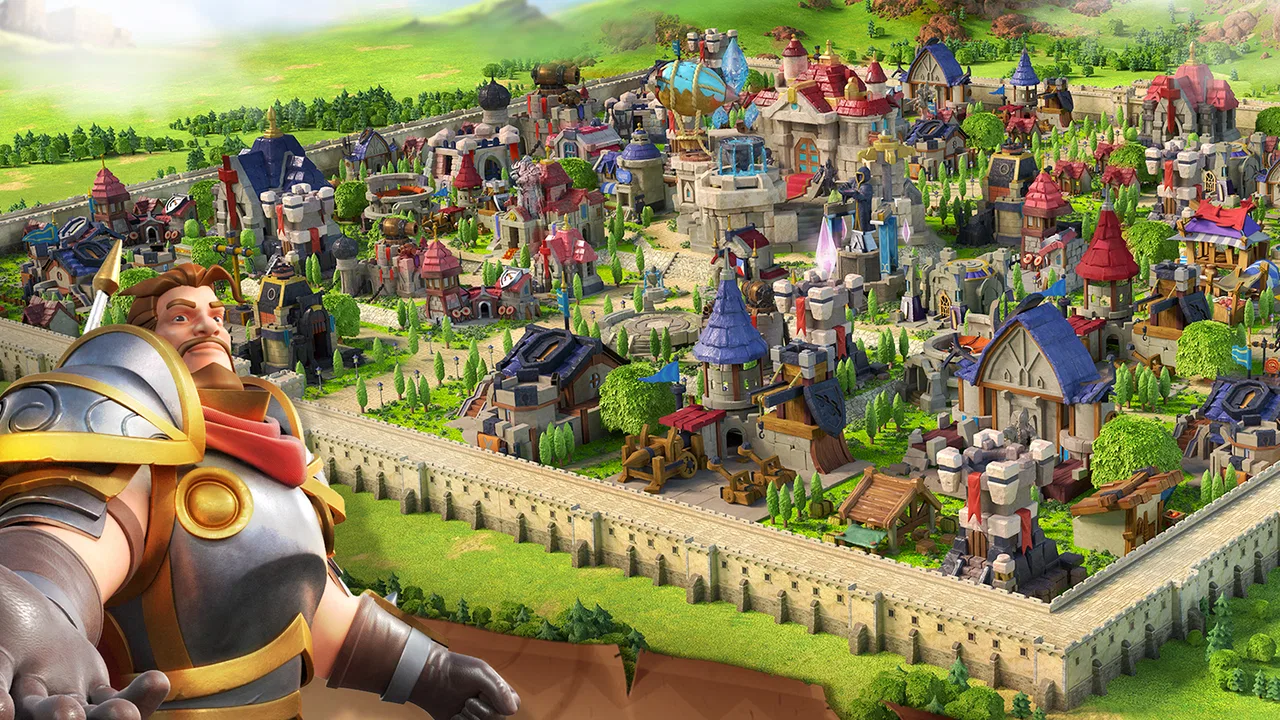
I spent time with Blaze of Battle as a mobile strategy game, and my first impression was that it wants to turn empire management into a regular habit rather than a short burst of play. You build a realm, train troops, and prepare for battles involving a large player community. That basic loop is easy to understand, but the real question is whether you enjoy waiting, planning, and making careful choices between competing priorities.
The game comes from Leyi Classic Games and is free to download. It has been available since June 17, 2016, and the current version is 9.1.3. Its Teen content rating places it above the level of a very young children's game, which fits the focus on warfare and competition. On Android, it requires version 6.0 or later, so many older devices can still meet the technical requirement.
With more than a million installs, roughly eighty thousand ratings, and an average score of 3.7, it clearly has a substantial audience but not universal approval. I read that combination as a useful warning: this is not a game I would recommend blindly to everyone. It has enough depth to keep strategy fans interested, yet its long-term design and optional spending can make the experience feel demanding for players who want quick, predictable progress.
You May Also Like

 Blood Strike: 2.5 Anniversary
Blood Strike’s Loadouts Turn Every Drop Into a Tactical Gamble
A close look at Blood Strike’s custom loadouts: how fast access to signature weapons reshapes its battle royale rhythm, rewards preparation, and narrows the gap between fights.

 Pandora - Music & Podcasts
Pandora’s Music Is Easy to Start, but Harder to Recover
Pandora’s strength is its low-effort path from a seed to a station. Its weak spot is how much confidence it asks you to place in connection, setup, and quiet recovery.

 8 Ball Pool
 Is Built on Rivalries, Rematches, and Routine
A close look at the rivalries, rematches, shared routines, and unanswered safety questions that turn a quick pool match into a persistent mobile community.

 Samsung Music
’s Quiet Strength Is Playing What You Already Own
Its reach comes less from spectacle than from dependable access to a personal library. That simplicity is both the app’s strongest retention engine and its ceiling.

 AccuWeather: Weather Radar
AccuWeather Review: A Quick, Clear Forecast for Everyday Decisions
For everyday plans, the best forecast is the one you can understand quickly. AccuWeather makes rain timing, radar, and local conditions easy to act on, with a few trade-offs.

 Hill Climb Racing
Why Hill Climb Racing Still Turns Crashes Into One More Run
A tiny car, a bumpy hill and one more upgrade: Hill Climb Racing keeps resurfacing because its simple chaos makes every near-miss feel personal.
More From Our News Desk



How the empire-building loop feels in everyday play
The central appeal is the relationship between your settlement and your army. Buildings give your empire direction, while troop training turns that preparation into military potential. I found the most satisfying moments came from treating those parts as one plan instead of tapping every available action without thinking. A stronger army is useful, but only when it supports what you are trying to accomplish next.
A realistic use case is a short evening session after work or school. I can check the state of the empire, begin a construction task, queue troop training, and then decide whether I have enough time or resources to make a more ambitious move. That structure suits people who like leaving a plan in motion and returning later. It is less comfortable for anyone expecting every session to deliver a complete battle or a dramatic change in power.
My practical advice is to choose a priority before spending resources. If the immediate goal is military readiness, scattering materials across unrelated improvements can leave the settlement feeling busy but not actually stronger. If the goal is steady development, rushing troop production may create pressure without solving the underlying weakness. The game rewards a player who thinks in sequences: improve one area, let it support the next, and avoid treating every available button as equally urgent.
This is also where the strategy category matters. Blaze of Battle is not simply a battle screen with a few upgrades around it. The empire-building layer gives decisions a longer tail, so an inefficient choice can affect later preparation. I prefer that kind of structure to games where victory depends almost entirely on reflexes, but it does mean that casual players may need time to understand what deserves attention first.
Planning matters more than constant activity
One useful habit is to separate decisions into three questions: what improves the settlement, what improves the army, and what protects future flexibility. The third question is easy to ignore. Spending everything as soon as it becomes available may feel productive, but keeping some room for an unexpected need can be more valuable than maximizing one category immediately.
I also found that short visits work better when they have a purpose. Checking in only to collect items can make the game feel repetitive. Checking in to complete a defined step, such as preparing for a planned military action or fixing a development bottleneck, makes the same routine feel more meaningful. That is a small change in approach, but it helps prevent the game from becoming a list of chores.
Players should also be comfortable with delayed rewards. The design is built around building and training rather than instant access to everything. If you need a strategy game that gives a clear result in five minutes, a compact puzzle strategy title may be a better fit. Here, patience is part of the skill set, not merely an inconvenience around the battles.
Where spending changes the conversation
The game is free, but it includes in-app purchases ranging from $0.99 to $299.99 per item. That is important context before starting, especially for anyone sharing a device with a child or trying to keep mobile gaming strictly within a fixed budget. The presence of a very high maximum purchase does not by itself prove that spending is required, and I would not claim that every player must pay to participate. It does mean the purchase environment deserves deliberate attention.
My approach would be to play without buying anything at first and learn the normal rhythm of development. That gives you a clearer sense of what progress feels like before money becomes part of the decision. If you later choose to spend, set a personal limit before the game creates a moment of urgency. A purchase made because you have already invested time can feel very different from a purchase made because it genuinely improves your enjoyment.
The trade-off is straightforward. Spending may make waiting or development pressure easier to tolerate, while free play asks for more patience and planning. I cannot responsibly turn the listed purchase range into a claim about exact competitive advantages, because the purchase facts alone do not establish how every item affects play. What I can say is that players who dislike any temptation to accelerate progress should approach this game cautiously, even though downloading it costs nothing.
Competitive play and the question of fairness
The promise of battling alongside or against a large player population gives the game more energy than a purely private empire simulator. Other players make preparation feel relevant. Your decisions are not only about making a beautiful or efficient settlement; they are connected to the possibility of conflict and comparison.
That same social scale can create pressure. A player who enjoys measured planning may find competition motivating, while someone who dislikes falling behind may experience every delay as a problem. I would not describe the game as a relaxed city builder with occasional combat. Its military identity is central, so the possibility of confrontation shapes how you judge your progress.
On fairness, I prefer to be precise. The free entry point is welcoming, but the existence of purchases means fairness cannot be judged only by whether anyone can install the game. A fair experience also depends on how spending interacts with progress and competition. The listed facts confirm the purchase range, but they do not establish a complete pay-to-win verdict. I would therefore treat competitive fairness as something to evaluate through your own tolerance for spending pressure rather than accepting a simple label.
For a player who wants a completely even contest, a premium strategy game with no purchase layer may be the safer choice. For someone comfortable with a mixed free-and-purchase model, Blaze of Battle can still be appealing, particularly if the pleasure comes from planning an empire and gradually improving it rather than proving that every match begins from identical conditions.
Another practical point is emotional distance. If an opponent's progress makes you feel compelled to spend, the problem is no longer only tactical. It becomes a budgeting and self-control issue. I recommend deciding what “good progress” means for you before comparing your empire with anyone else's. That keeps the game focused on your own goals instead of turning every stronger rival into a reason to buy something.
Who will enjoy it, and who should skip it
I would recommend it to players who like long-form mobile strategy, army preparation, and the feeling that today's decision can shape tomorrow's options. It is especially suitable for people who enjoy checking a developing plan several times during the day and who do not mind that improvement is gradual.
I would be more hesitant to recommend it to players who want a self-contained campaign, instant battles, or a completely purchase-free environment. It is also not my first choice for someone who becomes frustrated by timers, resource decisions, or the possibility that other players may create a stronger sense of urgency than a solo game would.
Compared with a traditional turn-based strategy game, this offers a more persistent mobile routine instead of a sequence of neatly finished matches. Compared with a simple city-building game, it places much more attention on troops and battle readiness. Compared with a premium strategy title, the free download is easier to try, but the in-app purchase range makes budgeting more important. Those differences are more useful than calling it simply “a strategy game,” because they explain what kind of commitment the experience asks from you.
Questions I would consider before installing
If you are wondering whether an older Android phone can run it, the minimum operating system is Android 6.0. That makes the requirement relatively accessible for devices that are not new, although smooth performance can still depend on the phone itself and on what else is running. I would install it on a device with enough free space and keep expectations sensible if the hardware is dated.
If you are asking whether it is genuinely free, the download price is free, but purchases are available inside the game. I would not confuse those two facts. You can begin without paying, while the presence of optional purchases means families and budget-conscious players should decide in advance how they want to handle them.
If you want to know whether it is suitable for younger children, the Teen rating is the clearest guide. The military theme and competitive setting make it a better match for teenagers and adults than for very young players. I would still make the decision based on the individual child, particularly their ability to handle competition and purchase prompts responsibly.
If you are unsure whether the player community is large enough to make the multiplayer focus worthwhile, the game has passed one million installs and has accumulated around eighty thousand ratings. Those figures show a sizable audience, but they do not guarantee that every region or play period will feel equally active. Your experience can depend on the community you encounter and on how much of the game you choose to engage with socially.
If you are deciding whether the latest build is worth trying, version 9.1.3 is the current version identified here. I would still judge it by your preferred style of play: the number matters for compatibility, but it does not change the basic choice between a persistent empire game and a faster, more self-contained strategy alternative.
My trust verdict after weighing the trade-offs
My overall view is cautiously positive. Blaze of Battle has a clear identity: it combines empire development with troop training and a battle-focused multiplayer setting. I like that the game gives planning a real role, and I think it can become a satisfying routine for someone who enjoys gradual progress. The strongest experience comes from making a plan and returning to it, not from rushing through isolated actions.
At the same time, I would not present it as a universally fair or pressure-free recommendation. The game is free to start, but purchases from $0.99 up to $299.99 per item make spending a serious part of the context. The available facts support caution, not an unsupported accusation about how competition is decided. If you are comfortable with that model and can keep firm limits, the game is worth trying. If you want an entirely level, no-purchase strategy environment, choose a different type of game.
The 3.7 average from about eighty thousand ratings reflects that mixed appeal. I see it as a game with a committed audience and clear friction points rather than a polished universal favorite. My recommendation is to begin slowly, learn the development rhythm, avoid treating every delay as an emergency, and decide early whether the competitive side adds enjoyment or stress.
My final advice: try it as a patient empire planner, not as a quick battle fix. That mindset makes the building and training loop easier to appreciate and gives you a fair chance to judge the purchase pressure on your own terms. For me, that makes Blaze of Battle a reasonable free strategy game to test, provided you know that its long-term pace and spending options are part of the experience rather than minor details.
FAQs for Blaze of Battle
01What is Blaze of Battle, and what kind of game is it?
Blaze of Battle is a real-time mobile strategy game focused on building a kingdom, training armies, researching technologies, and competing with other players. You manage resources, upgrade buildings, recruit commanders, and expand your influence on a shared world map. The game combines city development, alliance cooperation, exploration, and large-scale battles, so it is best suited to players who enjoy long-term progression rather than short, self-contained matches.
02Can Blaze of Battle be played for free?
Yes, Blaze of Battle can be downloaded and played without paying an upfront purchase price. However, it includes optional in-app purchases for resources, speed-ups, special bundles, and other progression-related items. Free players can develop their kingdoms and participate in events, but progress may feel slower than for users who spend money. Before downloading, parents and players should review device purchase settings and understand that some competitive advantages may be available through paid items.
03Does Blaze of Battle require an internet connection?
Blaze of Battle is primarily an online game and requires a reliable internet connection for most important features. Kingdom synchronization, alliance communication, world-map activities, events, and player-versus-player battles depend on contact with the game servers. It is not designed as a fully offline experience, so you may be unable to play normally during network interruptions or server maintenance. A stable Wi-Fi or mobile-data connection is recommended, especially during major battles.
04Is Blaze of Battle suitable for beginners, and is there a tutorial?
The game includes introductory guidance that explains the basic systems, including construction, resource collection, troop training, research, quests, and combat. New players can follow early objectives to establish their kingdom before joining more demanding activities. Nevertheless, the number of menus, timers, currencies, commanders, and upgrade paths can feel overwhelming at first. Joining an active alliance is especially helpful because experienced members can provide advice, reinforcements, and protection while you learn.
05What should I know about multiplayer, alliances, and in-app purchases?
Blaze of Battle is built around persistent multiplayer interaction. Alliances allow players to communicate, assist with construction and research, coordinate attacks, defend members, and participate in shared events. Because the world continues to develop while you are away, regular activity can be important. The game also offers optional purchases that may reduce waiting times or accelerate development. Players who prefer relaxed, entirely solo, or completely non-monetized experiences may find the competitive online structure less suitable.
Pros
- Real-time strategy battles create a strong sense of urgency.
- Alliance features make cooperation and diplomacy meaningful.
- A large world map offers plenty of territory to explore and conquer.
- Regular events provide extra goals beyond the main campaign.
- Base customization lets you shape your kingdom to fit your strategy.
Cons
- Progress can feel slow without frequent play or resource spending.
- The interface may seem crowded for new players.
- Power gaps between players can make competitive fights discouraging.
- Managing upgrades
- troops
- and resources requires considerable attention.
- Online connectivity is required for most gameplay features.

Blaze of Battle
Gallery